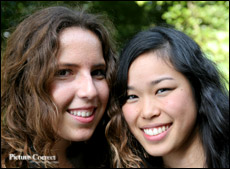
 The portrait market demand reaches enormous levels especially when the requirement is almost every household across the globe in every civilized country. Think about this from another angle – you could target every building and what is more exciting is that repeat business is almost incalculable. Parents love to have family portraits but some like to have it done annually as the children grow. Then they most often like to have a portrait of each child in addition to that. The opportunities become endless.
Portrait photography is also a photography business that can be initiated from home. Often only requiring modest photography equipment, you’ll only need several pieces of cloth (backdrop), a camera, some good lenses, two or maybe three lights and let’s not forget the tripod. In addition to the equipment being modest by any ones standards, it is all reasonably lightweight and easy to handle should you need to work outdoors.
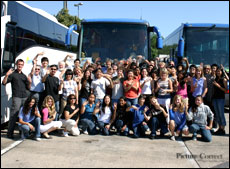
The most important rule to remember is that it is a portrait, not necessarily of just the head, but the person, or group is the focal part of the picture, so it is important to take the photograph without any extraneous clutter. Because you will always be dealing with people with whom you have to maintain control, not as a tyrant, but you have to guide your subjects. Therefore a certain degree of self-confidence is necessary. If you are taking a formal portrait of a group of children it is necessary for you as the photographer to ensure that none of the children are making faces.
This brings us to posing. Many photographers underate this essential requirement because posing will make or break your portraiture. There is much value in learning to guide people through various poses. Posing has an ongoing education requirement depending on age, gender, culture, promotion, product, and emotion needed for each piece of art etc. It is such an important and extensive subject that I’ve provided you with this downloadable guide which I think you should take seriously – Make Camera Friendly Posing Happen!
When you have signed up a person for a photographic portrait take a few extra shots, and offer them as wallet or purse photographs at a smaller fee. You already have started the business, capitalise on it, few people can resist the feeling that they have got “something for nothing”. This may seem a waste of time; they can be important additives for your portfolio.
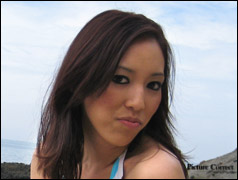 Portrait photography has undergone many changes of style since the introduction of the formal portrait. The modern emphasis is to bring out each individual’s personality. Top glamour models are paid enormous fees to express a distinctive personality, but to bring that aspect forward in your subject is as much about people skills as camera techniques. It is imperative to be able to create a rapport with your subject to bring out the expressions that display their personality. Anyone over the age of two can pose for the camera, with a vacuous expression, but the secret of saleable portrait photography is capturing more than the pose. To be a really good portrait photographer you have to be able to connect with people, if you have not got these skills, then it is better that you concentrate on some other type of photography-perhaps underwater photography if you want to be more active and adventurous
If you want to flatter your subject, you’ll probably want to minimize their nose. Stand about twelve feet from your subject, so that their nose isn’t significantly closer to you than the rest of the face. However, at such a large distance from the camera, if you want to fill the frame with just your subject’s face, then you need a high magnification lens. Typical “portrait” lenses are therefore between 90 and 135 millimeters long when you are using a 35mm camera.
Whilst a lot of portrait photography is completed inside a studio, the prospect of natural light can be very flattering. This can be achieved inside by positioning your subject in front of a window. Environmental portraiture presents different challenges. These portraits are best enlarged, otherwise the subject’s face gets lost in the background. Slow film and the use of a tripod; help to keep your images sharp. There are a number of professional photographers who argue that a portrait is not shown to it’s best advantage when it is clinically sharp and they use a filter, but with modern digital cameras, you can make an adjustment in Photoshop at a later time. However if you are using a digital camera you will achieve the best results with a camera with a true single lens reflex.
 Natural light or umbrella lighting can achieve soft lighting; both of these reduce shadows and show the face in a “better more attractive light”. However there is another type of portrait photography, which is high impact photography. This is a very dramatic type of portrait photography, which uses very strong light with a high contrast of tonal color. This technique is more effective indoors, as it is achieved by controlling light, and there is too much light to control out of doors. Position your subject at different angles to the light, from one side, or from underneath. This lengthens the shadows, rather than muting them, and gives a distinctly dramatic effect. You can achieve this in varying degrees, but if the light source is placed at 90 degrees to the face, it will throw the whole of the opposite side of the face in shadow. If you are using a digital camera you can also manipulate the contrast later to achieve a more dramatic effect.
You can also improve your photographs if you include some motion shots, as well as the traditional stills.
This article supplied courtesy of Roy Barker. Roy has more detailed information on posing for portraits at mastering posing for portraits
Like This Article?
Don't Miss The Next One!
Join over 100,000 photographers of all experience levels who receive our free photography tips and articles to stay current:




Leave a Reply