Have you ever captured a great photo on your phone but thought, “I’ll fix it later”… and then never did? What if editing didn’t have to wait? What if your creative flow could start anywhere and continue seamlessly wherever you go?
That’s exactly what happened during a call I had with Jim Nix. He was standing in Washington, D.C.’s Chinatown at night, surrounded by glowing color, energy, and beautiful light. The kind of scene photographers dream about. There was just one problem. No camera in hand.
Related reminder: only a little while left for the Luminar Neo Spring Sale
A Missed Shot That Wasn’t Missed
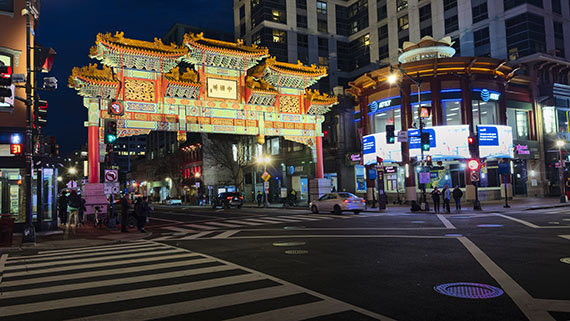
As we talked, Jim described what he was seeing. A richly detailed Chinese gate stretched across the street, lit with vibrant reds and golds. The deep blue evening sky created the perfect backdrop, while headlights, street lamps, and storefronts added layers of light and life to the scene. Cars rolled through the intersection, and people gathered along the sidewalks.
It was all happening in real time.
Instead of overthinking it, Jim did what experienced photographers learn to do. He adapted. He pulled out his phone and captured the moment.
When he reviewed the image, it looked exactly like many quick mobile shots do. The composition was solid, with strong leading lines from the crosswalk guiding your eye into the frame and the gate anchoring the scene. But the image itself felt flat. The colors were muted, the contrast was lacking, and the overall impact just wasn’t there.
It was a reference photo. Useful, but not inspiring.
And that’s where most people stop.

Turning a Phone Shot Into a Finished Image
As we were still on the phone, Jim sent the image over. I could immediately see what it could become. The bones were there. Strong composition, great subject, and beautiful light, just waiting to be shaped.
So I opened Luminar Mobile and got to work.
I deepened the sky to bring out that rich nighttime atmosphere. The colors in the gate started to glow, revealing details that were easy to miss in the original capture. I balanced the highlights from the bright signage and streetlights, then added contrast to give the image depth and dimension.
Within minutes, the transformation was clear. What started as a simple reference photo now felt alive. It reflected the energy, color, and mood Jim had been describing just moments before.
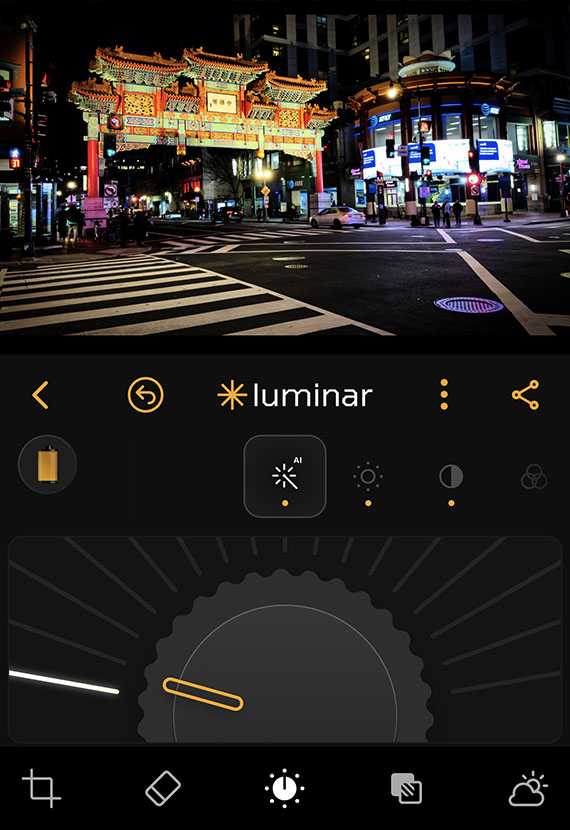
That’s the moment it clicked again. Editing isn’t just about fixing a photo. It’s about finishing the story.
What makes this even more powerful is what happened next.
Later, when that same image was opened on the desktop version of Luminar, the work was already there. No starting over. No extra steps. Just a seamless continuation of the edit.
That’s the real strength of cross-device editing. It removes the gap between capturing and creating.
You can start shaping an image the moment it’s captured, even if it’s not your photo, even if you’re mid-conversation, and continue refining it later on a larger screen with full control. The process becomes fluid, natural, and uninterrupted.
It also changes how we think about our images. That quick shot Jim took, knowing he would edit it later, became something more. Not because of the device, but because of the follow-through.
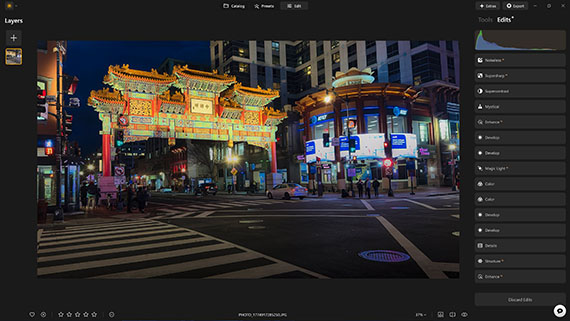
And let’s not overlook what made it all possible. Jim still composed the shot with intention. The crosswalk lines guide the viewer into the frame. The gate anchors the entire scene. The surrounding buildings and street elements create context and balance.
The edit elevated the image, but the vision started the moment he tapped the shutter.
Keep the Creative Flow Going
Jim took that photo knowing it wasn’t finished. He knew the real potential would come out in the edit. And in this case, that edit started immediately and continued seamlessly across devices.
That’s the shift. Photography is no longer tied to one place or one moment in time. You can capture on your phone, begin the edit right away, and refine it later on your desktop without ever losing momentum.
So the next time you take a photo that feels a little flat, don’t dismiss it. Look at it as a starting point. Open it up, shape it, and let it evolve.
Because sometimes the best images aren’t made when you press the shutter. They’re made in what you do next.
If you’ve been waiting for a better time to try Luminar Neo, a recent update plus the limited-time Spring Sale pricing makes this one of the better windows to jump in before the deal disappears.

About the Author:
Vanelli is an accomplished photographer, educator, and author based in Florida. He is the Director of Education at Skylum and has transitioned from being a Triple Crown Karate champion to teaching visual arts. With a diverse skill set, Vanelli develops educational content and courses for photo editing, teaching industry leaders along the way. He is a sought-after speaker at major conferences, delivering engaging speeches on photography. Vanelli’s contributions include his articles, educational videos, and hosting the widely acclaimed Luminar Coffee Break show.
Like This Article?
Don't Miss The Next One!
Join over 100,000 photographers of all experience levels who receive our free photography tips and articles to stay current:





Leave a Reply