Most photographers assume summer is the time for Milky Way photography—and technically, they’re right.
But if you only shoot in summer, you might actually be missing some of the best conditions of the entire year.
Quick note: With our Core Season Sale now live 🎉, this is exactly what the Milky Way Photography Field Guide was built for—helping you know when to shoot, where to look, and how to get it right without guessing. More on that below.
Why Summer Is Peak Milky Way Season
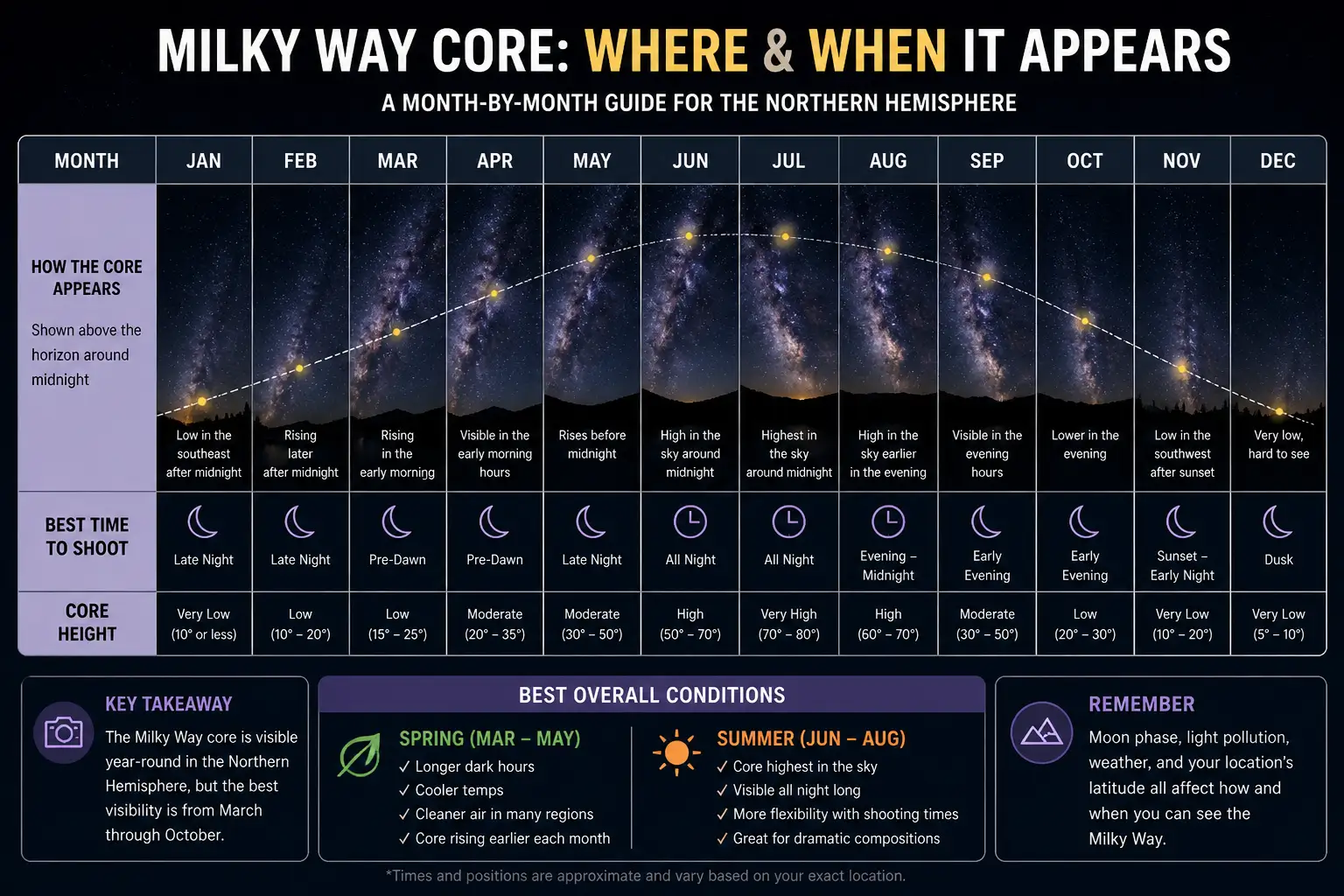
Summer earns its reputation for one simple reason: the galactic core is at its highest and most visible during the night.
From roughly June through August in the Northern Hemisphere, the core rises earlier in the evening, stays visible for longer stretches, and climbs higher above the horizon. That gives photographers more flexibility with timing and makes it easier to build strong compositions around foreground subjects.
If you want those classic Milky Way photos where the bright core seems to tower above the landscape, summer is usually when they’re easiest to capture.
The Hidden Downsides of Summer
Here’s what most guides don’t emphasize: summer also introduces new problems that can quietly ruin your images.
The nights are shorter, especially near the summer solstice, which means there are fewer hours of true darkness. Warm temperatures can also increase sensor noise during long exposures, and in many regions, summer haze and humidity can soften contrast and make the Milky Way look less crisp.
Popular dark-sky locations can also become more crowded in summer, which makes it harder to shoot peacefully, avoid stray lights, and find clean foreground compositions.
Why Spring Might Be Better
Spring doesn’t get nearly as much attention, but in many ways, it can be the smarter season for Milky Way photography.
From about March through May, the galactic core begins to reappear in the Northern Hemisphere. It may sit lower in the sky and rise later at night, but spring often offers longer nights, cooler temperatures, and clearer air in many regions.
Those conditions can lead to sharper stars, better contrast, and cleaner files with less heat-related noise. And for certain compositions—especially landscapes with a low, sweeping Milky Way band—spring can actually create a more natural and balanced image than the dramatic summer core.
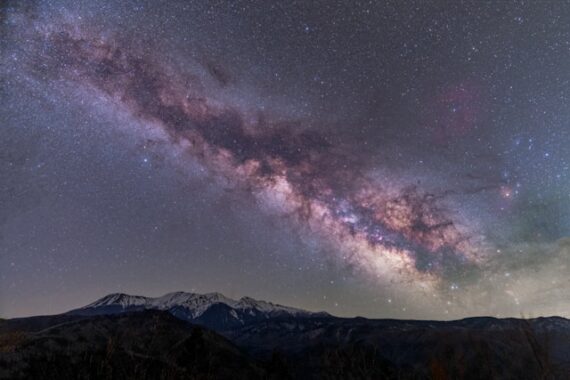
Photo captured by Kota Hamori
A Smarter Way to Think About “Best Time”
Instead of asking, “What’s the best season?”, it’s better to ask, “What kind of Milky Way photo am I trying to capture?”
If you want a tall, dramatic galactic core dominating the sky, summer is usually your best bet. If you want cleaner air, cooler temperatures, fewer crowds, and a more subtle Milky Way composition, spring may be the better choice.
Late summer and early fall can also be excellent because the Milky Way appears earlier in the evening, which means you may not have to stay out until the middle of the night to photograph it.
Don’t Just Follow the Season—Plan the Shot
The biggest mistake photographers make is assuming that being in the right season is enough.
In reality, timing the Milky Way correctly means understanding when the core rises and sets, how its position changes throughout the year, how the moon phase affects visibility, and how your foreground lines up with the sky.
That’s why two photographers can visit the same location during “Milky Way season” and come home with completely different results. One simply went outside on a clear summer night. The other planned for the right moon phase, the right core position, and the right hour of darkness.
Core Season Sale: Milky Way Photography Field Guide
If you want a simple, field-ready way to get all of this right, the Milky Way Photography Field Guide breaks it down step-by-step.
Inside, you’ll learn when the Milky Way is visible, where to look, how the galactic core moves across the sky, which camera settings to use, and photo editing tricks.

Right now, it’s part of our Core Season Sale—timed perfectly for the months when most photographers start planning their Milky Way shoots.
Deal ending soon: Milky Way Photography Field Guide Core Season Sale
If you’re hoping to capture better Milky Way images this year, this guide is designed to help you plan smarter, shoot with more confidence, and come home with photos you’re actually proud of.
Like This Article?
Don't Miss The Next One!
Join over 100,000 photographers of all experience levels who receive our free photography tips and articles to stay current:






Leave a Reply