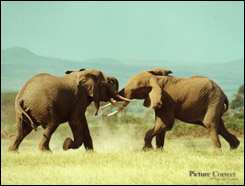
 Speed. It doesn’t kill, but without it a wildlife photographer might as well be dead. When shooting wildlife, you must be quick on the draw or you won’t get the shot. Even with autofocus equipment making focusing on your subject quicker and easier than in the days of having to manual focus, if you aren’t prepared to take the shot you might as well keep you camera in the bag.
As a leader of tours and workshops, one of the biggest problems I have encountered with participants is their taking too much time getting everything ready and missing THE shot. This is fine when doing a scenic and the subject is going nowhere, but when you’re getting ready to photograph a pair of bighorn sheep about to butt heads or an elk thrashing its antlers on a tree or shrub, you need to be ready to push the button at the opportune time.
How’s and Why’s
Knowledge of Equipment: Knowing your equipment is as important as knowing and being able to anticipate the movements of your subject. Yes, everyone today owns autofocus equipment, but there are times when you switch to manual focus for whatever reason.
Ask yourself these questions: Which way do I turn the barrel of my lens to bring the subject into focus if it’s approaching me? Which way do I turn the shutter speed dial if I need to go from 1/500th of a second to 1/1000th because of a change in lighting conditions? If you don’t know these you might have missed a shot. When something special happens, such as a bighorn sheep butting heads, you need to know how to work your equipment to get the shot, especially if some clouds move in front of or away from the sun changing your exposure just before the action happens.
More important than this is knowing all of the functions of your camera body. Just because it will do everything for you, you still have to know which settings, modes, white balance and programs are right for any given situation. Getting a new camera body and then taking it on a trip to a location you’ll probably never go to again is not the time to learn how your camera works. Read the manual beforehand and make sure you know enough to feel comfortable in at least one of the modes.
Tips
 A lot of shots of animals in motion can be made easier if you get on them early on. A good example of this is with birds in flight. The further away you are able to get the subject in your viewfinder, the easier it is to get the shot you want, especially when you have a large lens on your camera. Trying to find a flying bird through a large lens with it right near you is nearly impossible, because your field of view is very narrow. If you are able to focus on the bird at a distance you can follow it on its path, keep it in focus and get the shot at the location you want. Another thing to keep in mind when doing this is to follow through with your shot. Keep panning with your subject even after you have clicked your shutter release so you don’t have any unnecessary jerking of your camera causing an out of focus image. Bump up your ISO. In doing photography of birds in flight and other quick wildlife action raise the ISO to around 400. If you typically shoot at 100, this will give you two extra stops of light you wouldn’t have previously. Do this even if it’s a nice sunny day to get a very fast shutter speed to freeze the action.
Patience
While speed is important in getting a lot of shots, some that look like they require all facets of speed also rely heavily on patience. For these instances you have to stand there and wait for the anticipated action to occur and then be quick on the shutter release to get the action, like with sitting on a great blue heron or other type of bird standing in the water waiting for a meal to swim by. The shot you’re hoping to get is of your subject lunging into the water for a fish and then coming up with it.
For this you can do it one of two ways. First, you can sit there with your eye glued to your viewfinder and finger on the shutter release and wait for the action to occur or you can keep a watchful eye on the bird knowing that certain actions will happen just before it moves into action. Here is where knowledge of your subject comes into play. For hunting herons and other similar birds they will make a slight movement of their body position before plunging into the water for a meal.
Knowing this and other behavior patterns of animals helps in getting good action and behavior shots. Keep a mental notebook while working different wildlife species of seeing if they do something that prepares them to do something else.
 Conclusion
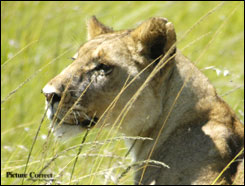
Wildlife action shots are the ones that show behavior. It’s nice to have profiles of an animal standing there looking back at you, but when you’re able to bring some behavior into the image it makes for more interesting photographs. Head shots and profiles do make their way into print quite often, but when your are able to incorporate behavior you’re able to tell more of a story. And after all, isn’t that what photography is all about, telling a story.
To get that good behavior shot you have to be ready for it to happen, not be driving up to a location where a moose is crossing the road getting ready to enter the willows, knowing you have to change batteries or lenses. Be prepared. Be knowledgeable. And most importantly, be quick.
Andy Long is an award-winning photographer / writer who devotes his photography work to the beauty of the world around us. His personal website is www.firstlighttours.com. As a leader of workshops for First Light Photo Workshops since 1994, Andy likes to help people explore new areas and to go home with a memorable experience as well as great images.
With more than 100,000 stock images, work has appeared in more than 30 publications and books as well as appearing in National Geographic and Animal Planet television shows. Besides these, Andy’s work has also appeared in Birder’s World, Outdoor Life, Audubon Regional Field Guides, regional AAA magazines, Montana Magazine, Outdoor and Nature Photography, Photo Media, National Cowboy Museum’s Persimmon Hill, Ancient Images note cards, travel brochures, Sierra Photographers Focus and in ads for Rollei cameras. He is a previous winner of the national RoseWater Network Photographer of the Year award.
Like This Article?
Don't Miss The Next One!
Join over 100,000 photographers of all experience levels who receive our free photography tips and articles to stay current:


Lions are our best friends