Street photography is usually about capturing a fleeting moment. But what if, instead of freezing people in motion, you let them blur into ghostly figures moving through the city?
Using slow shutter speeds, you can transform ordinary pedestrians into mysterious, semi-transparent silhouettes. The technique adds a sense of movement, atmosphere, and passing time to everyday street scenes—and it can be done entirely in-camera.
Here’s how to experiment with this creative approach.
Reminder: only 1 day left for the new Long Exposure Photography Guide at 70% Off
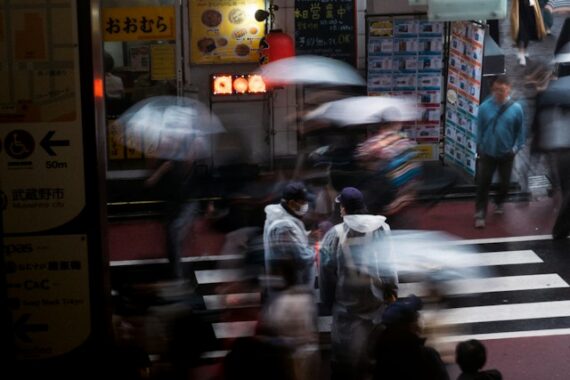
Photo captured by Jayant
1. Find a Scene With Movement
The best locations have a combination of interesting architecture and steady pedestrian traffic.
Look for busy sidewalks, subway stations, crosswalks, train platforms, or shopping districts. A stationary background provides a sharp visual anchor while moving people create the ghostly effect.
For more dramatic results, look for strong contrasts between light and shadow. A person walking through a beam of sunlight or past a dark storefront can create a particularly striking silhouette.
2. Start With a Slow Shutter Speed
Switch your camera to Shutter Priority (S or Tv) or Manual Mode (M).
Try these starting points:
- 1/4 to 1 second: Creates subtle motion blur while keeping some recognizable human features.
- 2 to 5 seconds: Produces elongated, ghostly figures as pedestrians move through the scene.
- 10 to 20 seconds: Can make people almost disappear, leaving faint traces of their movement.
Keep your ISO low, around 100, and adjust your aperture for proper exposure.
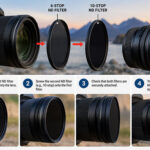
In daylight, you may need a neutral density (ND) filter to achieve shutter speeds of several seconds without overexposing the image.
3. Keep the Background Sharp
The contrast between a sharp cityscape and blurred pedestrians is what makes this technique so effective.
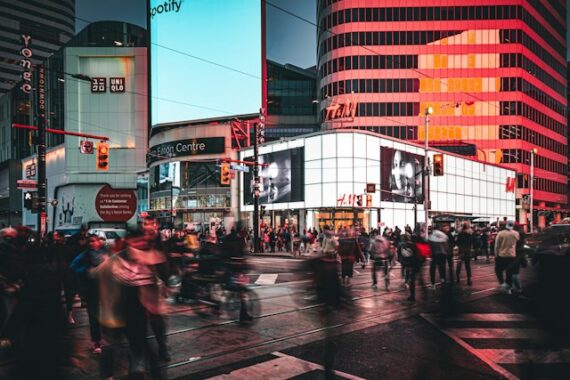
Photo captured by Jay Bhadreshwara
A tripod is ideal for longer exposures, but you can also rest your camera on a railing, bench, or other stable surface.
Compose your photograph around a strong stationary element, such as a doorway, staircase, street sign, or building facade.
Then wait for people to move through your composition.
Rather than following a particular subject, keep your camera completely still and let the street provide the movement.
4. Experiment With Different Levels of Motion
Not every slow shutter photograph needs extreme blur.
At 1/2 second, a walking pedestrian may retain enough detail to remain recognizable while their arms and legs blur.
At 3 seconds, the same person might become a translucent shape moving through the scene.
At 10 seconds, pedestrians who pass quickly through the frame may barely register at all.
The effect depends on how fast people move, how long they remain in the frame, and how much light they reflect compared with the background.
Try photographing the same location at several shutter speeds. You’ll discover that even small changes can dramatically alter the mood.
5. Use Stationary People as Contrast
One particularly effective street photography technique is to combine stationary and moving subjects.
Imagine someone standing still at a bus stop while dozens of commuters rush past. With a shutter speed of 1 or 2 seconds, the stationary person remains relatively sharp while everyone else becomes a blur.
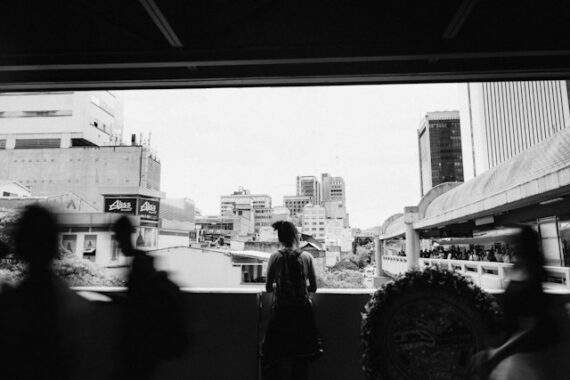
Photo captured by Jose Figueroa
This contrast can communicate isolation, stillness, or the feeling of being lost in a busy city.
Look for people waiting at intersections, sitting on benches, or standing near storefronts. Their stillness can become the focal point of an otherwise chaotic scene.
6. Try It at Night
Nighttime street photography opens up even more possibilities.
Streetlights, illuminated shop windows, and glowing signs can provide beautiful lighting for slow shutter photographs.
Moving pedestrians may appear as faint silhouettes against brightly lit buildings, while passing cars create streaks of light in the background.
Start with a shutter speed around 1–3 seconds and adjust based on the available light.
Wet pavement can make these scenes especially atmospheric by reflecting the surrounding lights.
Final Tip: Let the Scene Develop
Unlike traditional street photography, where timing a single decisive moment is often the goal, slow shutter photography rewards patience and experimentation.
Find an interesting composition, keep your camera steady, and photograph the natural flow of pedestrians moving through it.
You may need several attempts before the right combination of movement and timing comes together.
The beauty of this technique is that it makes the invisible passage of time visible. Instead of simply documenting where people were at one instant, you’re capturing the traces they leave as they move through the city.
And sometimes, those ghostly figures tell a more compelling story than a perfectly frozen moment.
For Further Training:
Some of the most breathtaking photographs reveal something the human eye can never see: the movement of time. Our new Long Exposure Photography Guide & Cheat Sheets (currently 70% off today for our 🍂 Autumn Afterglow Sale) walks you through everything from choosing ND filters and camera settings to photographing waterfalls, oceans, clouds, and nighttime scenes.

You’ll also learn how to avoid common mistakes and edit your long exposure photographs for professional-looking results.
Only 1 day left: The Long Exposure Photography Guide at 70% Off
Like This Article?
Don't Miss The Next One!
Join over 100,000 photographers of all experience levels who receive our free photography tips and articles to stay current:



Leave a Reply