Have you ever wondered how some serious consumers or photography enthusiasts have the ‘eye’ or the ability to properly frame a photograph with great colors? This person might be considered ‘artsy’ or having an artistic angle to his or her personality. Do you think this person was born with this trait or did he or she develop it? I believe with practice everyone has the ability to improve their photographs. However, it’s a matter of discipline. Are you willing to take lots of photographs and then ask yourself this one question, “How can I improve this image?” There are many ways to improve your photographs from an artistic perspective; however, I would like to focus on four. They are simple shapes, the decisive moment, golden hours and the rule of thirds.
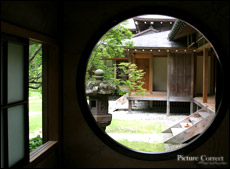 Simple Shapes After an assignment one day, I went jogging past an art gallery that had displays of photography when it hit me. The photographs that are simple are the most powerful. When a photographer focuses your attention on the simple shapes of the triangle, square and circle, you have less to distract your eye. The result is that you can more easily ‘get it’ or get the powerful message that the photographer is trying to convey. One of the most widely viewed photographs of the 20 th Century is Steve McCurry’s 1985 cover photograph for National Geographic Magazine. It is of a young Afghan girl with green eyes whose name is Sharbat Gula. Sharbat’s plain green background and her tattered red headscarf suggest movement in a counter-clockwise direction around her face. It’s the circle of the scarf, the triangle that makes up her nose and the circles that are those piercing green eyes that convey simplicity and power.
How can you get more simple shapes in your photographs? For starters, I always bring a camera with me when I am on a speaking assignment. Even when I am hired for a photography assignment I always take extra photographs for my personal archive. This ‘in front of and behind the lens’ practice led me to develop the Staash Perspective System (SPS). The SPS teaches that simplicity leads to more powerful communications. While you don’t literally need to have these simple shapes in your photographs, you need to keep thinking how you can have them represented in your images. In addition, this might involve a concept called ‘the decisive moment.’
The Decisive Moment The master of ‘the decisive moment’ was an extremely successful photographer named Henri Cartier-Bresson. He captured some of the most memorable black and white street scenes of Paris and used his patience and creativity to allow for that ‘decisive’ moment to occur. One of his most famous black and white photographs shows a man leaping over a large puddle of water in mid-air with the man’s reflection caught in the puddle below. Henri’s passion attracted students, aficionados, and collectors alike and made him a photography leader.
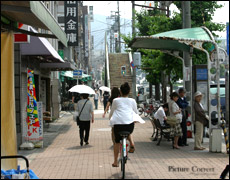 How do you master the decisive moment? It’s becoming increasing harder to do this in our fast-paced society and nearly impossible if you are on a group tour. Often times Henri would wait for hours at a staircase or at a very interesting intersection just waiting for the right person to pass by or for a memorable event to take place. He practiced ‘luck.’ Louis Pasteur defines luck as ‘when opportunity and preparation meet.’ I had a bit of this luck when I took a photograph of the Golden Gate Bridge in San Francisco.
I visited the first time to understand where the sun would set and how it would affect the bridge. My first visit was during the harsh light of mid-day and the bridge looked unflattering in its’ cold gray color. I returned two days later with only about 20 minutes to set up my tripod. I framed the bridge in a landscape view and waited. Every photographer that was there left, and I was beginning to wonder if I was missing something or forgot to take a shower. Finally I saw an ocean tanker ready to sail under the bridge and complete not only a decisive moment but also complete a triangle in the photograph.
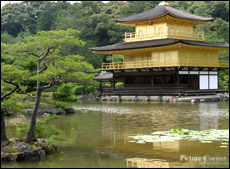 Golden Hours The main reason why I made an initial visit to the Golden Gate Bridge was to pay attention to the light and to understand where it would be shining as it related to my subject. This is a critical step if you want to capture images and even people while using the best possible light. As a matter of fact, if you took more photographs during the golden hours, or the hour around sunrise and the hour around sunset, the quality of your photographs would dramatically increase.
The main obstacle that stops most serious consumers or photography enthusiasts is not wanting to get up early in the morning. I recently took morning photographs of the US Capitol Building from the roof of another building on Capitol Hill. I had to arise before 5AM in order to drive to the desired location and to set up my gear. In the near total darkness I waited for the light to shine on the dome of the Capitol before the sun rose. The result was a pleasing image that cast the capitol in a soft light. I took many photographs and bracketed (taking lots of photographs at various apertures and shutter speeds) to assure that I would get the best possible final images.
The Rule of Thirds Sometimes I photographed the Capitol building slightly left of center and other times I took the image slightly to the right. I wasn’t having a hard time putting the image directly in the center of the frame; rather, I wanted to practice what the Ancient Greeks called, ‘the rule of thirds.’ The Ancient Greeks realized 3,000 years ago that the most beautiful works of art were those that could be divided into thirds. Earlier in the week I visited the opposite side of the Capitol to take photographs at sunset next to the Botanical Gardens and framed the building in the center, but I put trees to the left and to the right to complete the rule of thirds.
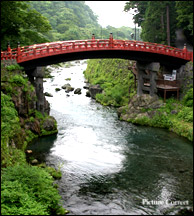 The rule of thirds isn’t limited to images horizontally or vertically. It can also be used diagonally or even within the photograph as in foreground, mid-ground and background. You can also extend the rule of thirds to fifths. This will come in very handy the next time you take photographs of people. It’s easy if you have three or five people in a photograph, but what happens if you have two? Create an imaginary third person and put that ‘extra’ person either to the right or the left of the other two people. The result will be a more balanced photograph and one that is much more interesting.
I put the all of these artistic suggestions to a test at a family wedding. Right around sunset I gathered up my three-year old son, my nephew of the same age and another six-year old nephew. I put them in front of an old wooden door that was getting the evening sun at St. Augustine, Florida’s oldest house. I put my six-year old nephew in the middle and my son and my other nephew on either side. I had the golden hour light, practiced the rule of thirds and was using simple shapes (the square door, the triangle of the three boys and the circle of their faces). The only thing that was missing was the decisive moment. If you have ever taken pictures of children, there is a limit to their patience. I took seven photographs before they wandered off into the garden to play ‘chase me.’ One of the seven photographs had the natural or photojournalistic look I was after. It was unplanned and decisive. It could be called a lucky photograph, but in reality, it was taken when opportunity and preparation met.
Mark Sincevich is the Executive Director of the Digital Photography Institute (DPI) as well as a world-class professional photographer. He regularly speaks about photography and related subjects, is frequently quoted in the media and is the founder and Chief Perspective Officer of Staash Press. Mark is also the creator of the Staash Perspective System (SPS). The SPS takes its inspiration from photography and teaches that simplicity leads to more powerful communications. He can be reached at http://www.digitalphotoinstitute.com.
Like This Article?
Don't Miss The Next One!
Join over 100,000 photographers of all experience levels who receive our free photography tips and articles to stay current:





Leave a Reply