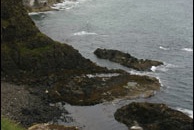
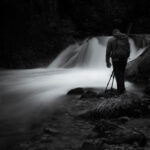
As landscape photographers, it’s our job to catch the emotional essence of a place and show it to others. We want to inspire people with the beauty of a world they might never even have known existed.
Learn to snap jaw-dropping wallpaper-quality photographs with our tried-and-true landscape photography tips:
Landscape photography has the ability to take your viewers into another place without actually being there. Anybody can pick up a camera and take a photo of an interesting place, but it takes a careful and mindful photographer to take a landscape photo that is truly compelling. Most of the really impressive landscape photos that you will see have a few common elements.
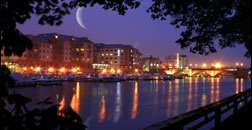
The best times for landscape photography without additional light sources, or looking at it in a different manner, away from city lights, is either when the moon is full, the two days before the full moon and the two days after the full moon. Any clouds in the sky will also affect the amount of light available for your night photography, just as they would if you were shooting during the day.
We don’t have to stick to many rules to produce great landscape images, but knowing what they are will make your pictures more successful. There are two salient points in landscape photography: how to compose your image, and how to use available natural light in any given situation.
Landscape photography is a great field of photography, especially if you love nature and if you love to travel. You can travel the world taking pictures of beautiful scenes across many countries. Of course, this is landscape photography on a big scale. Not many people are lucky enough to start off traveling the world.
There aren’t many but some of us take an interest in architectural landscape photos. With a view to giving some insight on this subject I have created this article to give a basic understanding and supply some facts about its origins.
Beautiful subjects and technical ability are not enough to make a good picture. Photographers must properly compose the photo, too. Composition should be pleasing and harmonious; it should help driving the viewer’s eye through our picture as we desire.
To my mind there are two distinctly different types of landscape photography around. That of the natural landscape photography, and that of the urban landscape photography. Both have their pros and both have their cons, and it’s really up to the photographer and their sense of imagination to get across to us a grand scene.
Filters are used in photography to bring back an image to the way our eyes have perceived the original scene. Some times it’s not possible for our cameras to record an exact scene – so we have to rely on the manufacturers of camera products.
If you are only going to buy one filter for your landscape photography a polarizing filter is the one you’ll use most. A polarizing filter can be used with colour or black and white and is probably the most important filter on the market today.
First thing that you must know is that to get really great landscape and nature shots you really need an SLR with appropriate film for the job, but these tips will help you even if you are using a point and shoot.
We are always looking for more interesting and insightful photography tips and techniques to share with our readers. We would love to publish an article by you if you are interested in writing for us. See what we are looking for and get in touch.