
Articles by Richard Schneider - Page 10 of 92 - PictureCorrect920 articles

Depth Compression with Telephoto Lenses

Depth Compression with Telephoto Lenses

One of the most visually striking effects in photography comes from using telephoto lenses to compress depth. Photographers often describe this as the “background getting pulled closer,” but what’s really happening is a change in perspective relationships between objects in the frame. Related: offer ending soon for the Composition Cheat Sheets 🕙 March Markdown When […]

Continue Reading

Diffraction: The Invisible Enemy of Landscape Photographers

Diffraction: The Invisible Enemy of Landscape Photographers

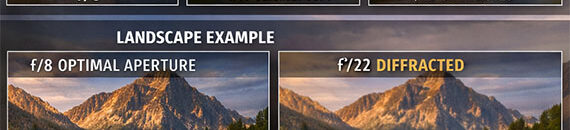
Landscape photographers often assume that stopping down the lens to f/16 or f/22 will produce the sharpest images. After all, a smaller aperture increases depth of field, which should make more of the scene appear in focus. But there’s a hidden optical effect that starts working against you when apertures get too small: diffraction. Diffraction […]

Continue Reading

What “Sharpening” Really Does at the Pixel Level

What “Sharpening” Really Does at the Pixel Level

When photographers talk about “sharpening,” it’s easy to assume editing software is restoring lost detail or magically fixing soft images. In reality, most sharpening techniques don’t create new detail at all. Instead, they manipulate contrast at the pixel level, particularly around edges. By exaggerating the difference between neighboring pixels, sharpening tools create the perception of […]

Continue Reading

Single-Point vs. Wide AF for Busy Travel Scenes

Single-Point vs. Wide AF for Busy Travel Scenes

Autofocus technology has become incredibly sophisticated, but busy environments can still confuse even the most advanced camera systems. Whether you’re photographing a crowded street market, a lively festival, or a bustling city square, your camera may struggle to decide what exactly to focus on. This is where understanding the difference between Single-Point AF and Wide […]

Continue Reading

Want Sharper Photos? Topaz Photo’s Wonder 2 Model Makes It Easier

Want Sharper Photos? Topaz Photo’s Wonder 2 Model Makes It Easier

Photographers are always searching for one thing: tack-sharp images. Whether you’re shooting wildlife, landscapes, travel scenes, or fast-moving subjects, sharpness is often the difference between a good photo and a portfolio-worthy one. That’s why many photographers have turned to Topaz Photo AI, a tool designed specifically to improve image quality using artificial intelligence. Now, Topaz […]

Continue Reading

Advanced Lightroom Shortcuts and Hidden Gems

Advanced Lightroom Shortcuts and Hidden Gems

Lightroom is a powerful tool for photographers, offering an extensive range of features for photo organization and editing. Knowing a few shortcuts and hidden features can significantly speed up the workflow and enhance your editing process. Here are some helpful Lightroom shortcuts and secrets that can benefit photographers. Related: only a little while left for […]

Continue Reading

Manual Flash Photography Intro

Manual Flash Photography Intro

For many photographers, flash feels unpredictable. Sometimes it looks too harsh, other times the subject is still dark, and the results can vary from shot to shot. Because of this, many cameras default to automatic flash modes like TTL, where the camera decides how much flash power to use. But there’s another approach that many […]

Continue Reading

How to Stop Your Phone Camera From Refocusing

How to Stop Your Phone Camera From Refocusing

If you’ve ever tried to photograph a moving subject with your smartphone — a bird taking off, your child running through a park, or waves crashing on a beach — you may have noticed something frustrating. Right when the moment happens, the camera suddenly hunts for focus. The image briefly blurs, the phone adjusts, the […]

Continue Reading

ETTR in Black & White: Exposing for Maximum Tonal Data

ETTR in Black & White: Exposing for Maximum Tonal Data

Black and white photography lives and dies by tonal nuance. When you remove color, you remove a major layer of separation. What’s left? Light, shadow, midtones, and texture. That means how you expose your image matters even more than it does in color. One of the most powerful — and most misunderstood — exposure strategies […]

Continue Reading

Why Exposure Compensation Still Matters in Manual Mode

Why Exposure Compensation Still Matters in Manual Mode

If you’ve ever switched to Manual mode and thought, “Exposure compensation shouldn’t matter anymore… right?” — you’re not alone. On the surface, exposure compensation feels like an Auto-mode crutch. Something designed for cameras that are making decisions for you. And since Manual mode is all about control, it seems logical that exposure compensation would become […]

Continue Reading