ISO should be one of the easiest aspects of digital photography to master, but many beginners in photography still have a hard time understanding this fundamental camera setting.
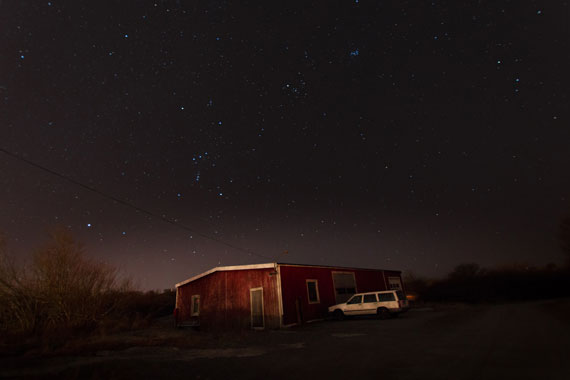
Photo captured by Joacim Bohlander
I suspect this is because of the way it is being taught. You see, ISO started out as a property of film, and it was much easier to visualize it in terms of the old technology. So that’s where I want to start my explanation, before bringing you into the 21st century with ISO today.
ISO actually started out as ASA, which stands for American Standards Association. Decades ago, a commercial film manufacturer came up with a set of numbers to define the sensitivity of different types of film. That set of numbers was accepted by the American Standards Association, so all American manufacturers could use the same system. Later, the American standard was adopted by the International Standards Organization, so ASA became ISO.
What does all that mean? Well, it means that the letters ISO didn’t really stand for anything except for the name of an organization.
What is important is what ISO referred to, which was the sensitivity of the film. The emulsion on some films reacted quite slowly to light, and on other films much faster. Slower films had a smaller ISO number, like 25, 64, 100. Faster films had a higher number, like 200, 400, 800.
A slow film needed a relatively high level of light to create a well-exposed photo. That meant that to take a photo in darker conditions, you would need to use a fairly wide aperture and/or a fairly slow shutter speed to get a result. On the other hand, a faster film reacted to light a lot more quickly, so it needed much less exposure to light to take a photo.
Fast film sounds pretty good, doesn’t it? A chance to take a photo in any conditions without a tripod, and to freeze moving subjects with very fast shutter speeds. So why didn’t everyone just use fast films all the time?

Photo by Giuseppe Milo; ISO 2500, f/3.5, 1/60-second exposure.
The answer is that the advantages of fast films came with a trade-off: loss of image quality. The grains of emulsion on a fast film were larger, so a photo taken on a film with ISO 400 or 800 had a rougher, ‘grainier’ look. This may not have been a problem in a small print, but became quite apparent with big enlargements. Consequently, most professional photographers preferred to use slower films of 100 or 64 ISO for most of their work.
So is this just a lesson in ancient history? After all, you have a digital camera, so what does all this have to do with you. Well, it may surprise you to know that despite the huge revolution in technology, the essentials of ISO have not changed one bit.
Your camera should allow you the option of adjusting your ISO setting. Just like in the days of film, if you set your ISO to a low number like 100, you will need more light to create a correct exposure. That means that you may need to keep a tripod handy for cloudy days, and in certain low-light situations you may not always get the aperture and shutter speed settings you want. If you set your ISO to 400 or 800, your camera will become much more sensitive to light; you will be able to shoot in exactly the same conditions without a tripod, and with greater flexibility to choose the aperture and shutter speeds you want.
But here is the amazing part. Higher ISO settings still come with the same trade-off that once existed with film. Along with the speedier sensitivity to light, you can also expect the image to have a grainier finish. I don’t know if it is pixelation or digital noise, or a combination of both, but it is generally understood that for all their advantages, high ISO photos come with a reduction of image quality that becomes more obvious the more you enlarge the image.
So there you have a quick introduction to what ISO is all about. Perhaps I am just showing my age, but I find this subject easier to explain in old-technology terms. For many people it is easier to visualize when related to something solid like film, rather than something that happens on a computer chip. Anyway, I hope this helps you if you have had trouble understanding what ISO is all about.
About the Author:
Andrew Goodall writes for https://naturesimage.com.au/ and is a nature photographer based in Australia. He manages a gallery in Montville full of landscape photography from throughout Australia.
Like This Article?
Don't Miss The Next One!
Join over 100,000 photographers of all experience levels who receive our free photography tips and articles to stay current:



While I realise that this is an old article, it seems the discussion is still open. Puzzled by the images that you chose to illustrate this. The couple kissing has a wide aperture and narrow depth of field, but the two interiors shots also have quite wide apertures and a very deep depth of field. Are they mislabelled?
No – there is no such thing as an International Standards Organization – their correct name in the English language is the International Organization for Standardization (or IOS). As this changes in different languages, eg in French it would be Organisation internationale de normalisation (ION), therefore they use the trading name of ISO – derived from the Greek isos, meaning equal
@Yvon – Either you didn’t read the article or didn’t understand it! The word “use” doesn’t necessarily mean manipulate, like adjusting your camera settings, but is more about “understanding” what you’re doing, or knowing the reason why you would want to do it.
All too often,users of digital cameras tend to think of exposure in terms of shutter speed and aperture, and once a given ISO has been set, just use that, without “experimenting” with that magical ISO setting that no film camera could really do well. “Elderly” photographers like myself will remember “pushing” ASA by using a camera setting different to what the film actually said it was increasing it to get better saturation in slides, for example, but only within fairly tight limits, otherise results became unpredictable. Camera sensors today are streets ahead of that old technique. Yes, noise increases as you go higher, but even “grain” can be interesting in some images. And of course, almost all cameras have noise reduction software built in. That just means you have to wait a bit before you can take the next shot. As can be seen from most of the comments, the article was appreciated by the majority. It gets my vote too.
Yvon,
I disagree with you. The ‘tip’ here is that if you understand ISO you can understand why it is important to use it appropriately. After reading this tip you can now chose whether you want the grain as part of an artistic image, or tight grain for something like documentary work. It can be critical in different instances to understand this.
As an old school photographer who ran when digital came into play, I am now trying to recapture my love of photography sans the darkroom (where I spent hours and hours playing) and I have to say this blog has been great to inspire me to get back into it. Great article-
Thanks Andrew for all of the tips and info. I have really enjoyed reading your newsletter.
I agree with Robyn!
My head is still in the film SLR so I think that way. You just clarified it all in my mind.
Thank you!
Great article, a few spelling errors but it’s the content that I like. This has explained in more detail that which I have been told before about ISO. I always new ISO to mean: ‘is the sun on’, or to set the camera for the light available. It is always nice to learn something new, if you have not learned something today then it has been a waste of a day, knowledge is gold.
@ Yvon… I think what the author is suggesting is to use the exposure triangle. ISO is at the top, shutter-speed, and then aperture. i think it all depends on what your subject is, how fast it is moving, and what kind of light you are working with. Most photographers both film and digital try to get away with the lowest ISO-ASA speeds they can to reduce noise/grain. I don’t think there is any set surefire setting with any scene. It’s entirely up to you and your camera’s capabilities. How much noise/grain you are willing to put up with? How much blur are you willing to put up with? How much detail do you want? All of those factors are considered. If you need a starting point. It’s less expensive these days with digital than it was in film, so just go out and take tons pf pictures and do not be so hard on yourself about your results. Practice…practice…and practice some more.
It’s my opinion. that the reason for excessive distortion at higher sensitivities in film and digital captures has to do with we have not yet reproduce the sensitivity of the human eye. Until we can manufacture a human eye there will be artifacts that will be produced with faster ISO’s or higher ASA’s. I think it’s all in the interpretation (the way the information is transferred to our brains that make us see) is the key. We are really close, but not quite there yet. I think it takes a massive amount of processing speed to read, interpret and output how a human brain reads, interprets, and outputs light. To make up for that discrepancy the digital media tries to replace, or guess what a human sees and tries to compensate for lack of artificial processing power.
This far beyond me but that’s how i see it…..
This should not be title: How to use ISO settings in digital photography.
It is not about how to use or set up your camara but just an explanation or understanding about ISO
i see no tips, no suggestions, no recommandations about using ISO
This is only a definition of ISO
So please be serious about title of your articles
Usually a higher ISO is to get a better shutter speed for the conditions. I never liked the noise generated, and I thought I was clever and simply underexposed the image so that I would not have to bump the ISO up as much (and I’d fix the exposure in post). Do not do this – the greatest amount of noise is always in the shadows – so after fixing in post, I had an even worse photograph.
The higher the ISO, the more important it is to expose to the right.
Great article. However to side track the main content of the article let me clarify what ISO really is. 1. It stands for International Organization of Standardization. Not International Standards Organization. I know I’m splitting hairs. When ISO startled after World War II the organization based their name of the Greek word isos which means equal. All member nations regardless of size each have one vote on the standards that are introduced. They each have equal footing if you will. 2. Because their name would be different in each language they settled on ISO. So regardless of the language the short form of their name is ISO. Like the old film standard set by ASA and then adopted by ISO the digital ISO for sensor sensitivity is standardized as well from manufacturer to manufacturer. This benefits you and me the consumer. The Central Secretariat (headquarters) of ISO is in Geneva, Switzerland.
When film boxes changed from ASA to ISO it was introduced as an acronym standing for International Standards Organization. I know, I have also seen the argument about ISO coming from the Greek “isos”, which they put on their web page. I suspect it is a later revision, perhaps to make some European countries happy. If that version is correct then they used the wrong case. It should be “Iso.” not “ISO”.
Thank you for writing this. I am a hobby photographer. I have taken classes, read books, watched videos and still can not understand some of the settings on my camera and NEVER go out of auto mode because of it. It is because of my learning style and the fact that many of the settings do “not make sense” such as the term ISO not standing for anything other then the name.
This was one of the few articles that helped clear some of it up. Believe me, if it was made clear to me, it should be clear to anybody!
thanks again
Lisa. TAKE YOUR CAMERA OUT OF AUTO MODE!
Then go out and shoot some stuff. You’re sticking to auto because every shot means too much. Take your camera with you more and just play around with it. Stick it in M mode (not that scary it turns out) and start twiddling the dials. It’s fun
Thanks for a great article Andrew! It might be in ‘old-technology’ terms but you’ve explained it all in a simple understanding way.
Avangelist, it has nothing to do with the processor guessing or write speed.
On a digital camera it is simply the addition of electronic gain (amplification) to the fixed signal level that comes from the sensor. Think of the grain as being like the hiss you get on an audio amplifier when you turn the level up high, adding more gain. A higher ISO will have more hiss (noise).
But there is more too it than just noise and grain with a digital camera. It also effects dynamic range and latitude. There will be an optimum “native” ISO for every camera where the maximum dynamic range is delivered. Adding or subtracting gain from the native ISO can reduce the latitude of the camera buy either cropping blacks if the ISO is too low or clipping whites if it is too high.
The result of using High ISO settings on the camera, is that the processor guestimates elements of the image being taken, this allows it to write the data faster.
On some cameras, but less so as they release new models, this causes some adverse particles around the edges of objects which can look rather nasty. It can also mean you get colour spots in contrasty areas.
I’ve gone from a D80 to a D300s in the last 6/7 months and the difference in high ISO quality is astonishing.
It’s not really until you begin looking at an image at 100% you will even notice these things and for most, if not all, you wont tell the difference once it is actually on paper, or has been resized for web viewing.