Watch the video below for a front-row seat in Jim Dicecco’s class for beginning to intermediate photographers on how to turn your snapshots into stunning photography. A professional photographer and product educator for Canon, Dicecco explains how by keeping just a few pointers in mind, you can tap into the creative right side of your brain and take your photography to the next level. Trying to keep his presentation as non-technical as possible, he focuses on two main topics: matching the right lens to the right situation, and choosing the most effective composition as you’re out shooting. The video is long, over an hour and a half, but is also fast-paced and packed with useful information:
Here are a few highlights:
Choosing a Lens
50 mm – creates a natural or realistic look, because it imitates how our eyes actually see
Wide-Angle (35 mm and lower) – captures more information than the eye can take in at once
- typically for large landscapes/scenic shots or cramped interiors
- can also be used for an interesting point of view that creates dramatic, graphic images because of the perspective distortion
- can emphasize the foreground while the background stays in detailed focus for a sense of place

taken with a wide-angle lens
Telephoto (85 mm and higher) and Super-Telephoto (upwards of 300 mm)
- short telephoto lenses are ideal for portraits because they offer mild compression for a more flattering shot
- good to use with “camera-shy” subjects, whether people or animals, or simply to span physical distance
- can visually isolate subjects for a crisp focus and a nicely blurred background

shot with a telephoto lens to compensate for the distance
“Typically, the rule of thumb is that you pick your telephoto lens based on where you are on the food chain: the lower you are, the longer you want it!”

shot with a telephoto lens to isolate the subject against a soft, blurred background
Specialty Lenses
- Macro – for extremely close range, capturing minute detail; can also be used for portraits
- Fisheye – super wide-angle for deliberate distortion

shot with a macro lens to capture the fine detail
Composition
- look for what will catch the eye in a composition, including the brightest or sharpest object, geometric shapes, motion, and, of course, people
- follow the “Rule of Thirds” (don’t place your subject in the center of the composition)
- you can use cropping can improve the composition
- look for balance and symmetry
- composing your shot diagonally is another option
Check out some examples below:

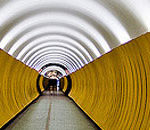
using shapes as part of the composition

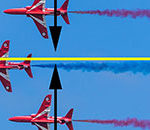
capturing an in-motion moment that would normally be too fast for the naked eye to see

demonstrating the rule of thirds

a balanced composition

a diagonal composition
For more great tips, check out the whole video!
Like This Article?
Don't Miss The Next One!
Join over 100,000 photographers of all experience levels who receive our free photography tips and articles to stay current:

Great photography learning info